The End of QT in 2025
A Turning Point in Monetary Policy
After years of draining liquidity from the financial system, the Federal Reserve finally announces the end of Quantitative Tightening (QT).
For most people, this sounds like a dry technical adjustment. But for investors, especially those in crypto, it’s a flashing neon sign.
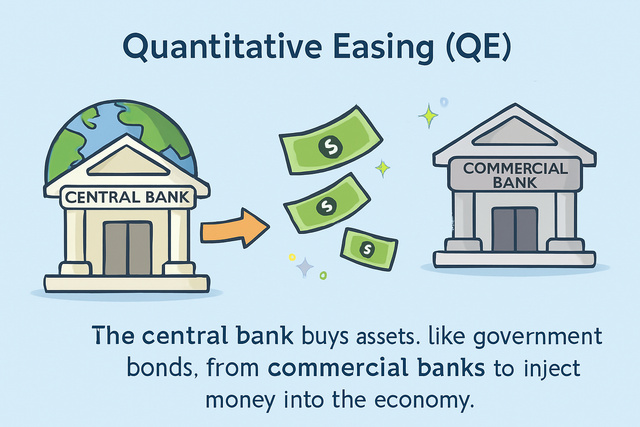
Why? Because QT ending isn’t just about stopping the drain. It’s about setting the stage for Quantitative Easing (QE), the Fed’s liquidity‑injecting counterpart.
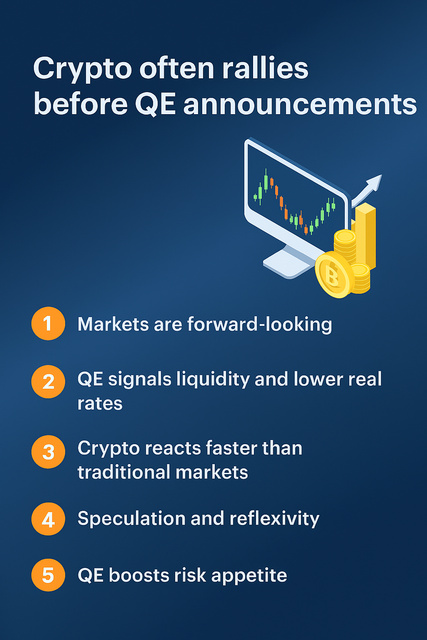
And markets, being forward‑looking, don’t wait for QE to start. They rally in anticipation. Crypto, the most liquidity‑sensitive asset class, tends to move first and fastest.
We’ll explore why the Fed’s decision to end QT in Q4 2025 matters, how QE historically fuels rallies, and why crypto investors should pay attention to the months before QE actually begins.
What QT Is and Why It’s Ending
QT is the process of shrinking the Fed’s balance sheet. Instead of reinvesting proceeds from maturing Treasuries and mortgage‑backed securities, the Fed lets them roll off. The result: less cash in the system, tighter financial conditions, and higher borrowing costs.
Since 2022, QT has been the Fed’s main tool to combat inflation. But by late 2025, cracks are showing:
- Bank reserves are falling toward stress levels.
- Short‑term funding markets are flashing warning signs.
- Liquidity stress is emerging, with borrowing costs rising above the Fed’s interest on reserves.
Faced with these pressures, the Fed decides to halt QT in December 2025. Policymakers argue reserves are now “ample,” and pushing QT further risks destabilizing the system.
QT vs. QE: Two Sides of the Liquidity Coin
Think of QT and QE as opposite pedals in the car of monetary policy.
- QT is the brake: it drains liquidity, slows markets, and tightens conditions.
- QE is the accelerator: it injects liquidity, lowers yields, and fuels rallies.
Before QT ends, markets immediately start speculating about when the Fed will hit the accelerator again.
Case Studies of QE Rallies
QE1 (2008–2009)
In the depths of the financial crisis, the Fed launched QE1. But here’s the kicker: markets began rallying months before QE was fully implemented. Investors anticipated liquidity injections and bid up risk assets in advance.
QE3 (2012–2013)
QE3 was dubbed “QE infinity” because of its open‑ended nature. Again, equities and commodities rallied as soon as QE was announced, not when balance sheet expansion peaked.
Pandemic QE (2020)
When COVID‑19 hit, the Fed unleashed unprecedented QE. Bitcoin surged from under $5,000 in March 2020 to over $60,000 by early 2021. The rally began as soon as QE was hinted, not when liquidity actually flooded the system.
Lesson: Markets are forward‑looking. They price in QE before it happens.
Why Crypto Frontrun QE
Crypto is uniquely sensitive to liquidity. Here’s why:
- High beta asset: Crypto reacts more violently to liquidity changes than equities.
- Global liquidity sensitivity: Bitcoin and Ethereum are priced in dollars, but demand is global. QE in the U.S. spills over worldwide.
- Narrative‑driven: Crypto investors thrive on macro narratives. “QE is coming” becomes a self‑fulfilling prophecy.
In late 2019, Bitcoin rallied as the Fed shifted toward easing, even before formal QE announcements.
Timeline of Q4 2025 Into 2026
- October 2025: Fed signals QT will end.
- November 2025: Liquidity stress dominates headlines.
- December 1, 2025: QT officially ends.
- Q1 2026: QE discussions intensify, balance sheet expansion likely resumes.
Crypto markets won’t wait until Q1 2026. They will likely rally in late Q4 2025, pricing in QE before it happens.
Investor Implications:
- Equities - relief rally as liquidity stabilizes.
- Bonds - yields fall as QE expectations grow.
- Crypto - potential explosive rally, especially in Bitcoin and Ethereum, as forward‑looking traders anticipate liquidity expansion.
Strategy: Investors may consider dollar‑cost averaging into crypto during the anticipation window between QT ending and QE beginning.
Risks to Consider
- Inflation risk: QE could reignite inflation, forcing the Fed to tighten again.
- Policy credibility: Frequent pivots may undermine Fed independence.
- Crypto volatility: While QE anticipation drives rallies, corrections can be brutal if QE is delayed.
The 2013 “taper tantrum” showed how markets can misprice QE expectations, leading to sharp corrections.
Conclusion
The end of QT in Q4 2025 is more than a technical milestone. It’s a psychological turning point. Markets, especially crypto, are forward‑looking. They don’t wait for QE to start; they rally in anticipation.
For crypto investors, the window between QT ending in December 2025 and QE beginning in 2026 could be one of the most lucrative periods in recent history.
December 2025 may be remembered not as the end of QT, but as the beginning of the next great crypto bull run.